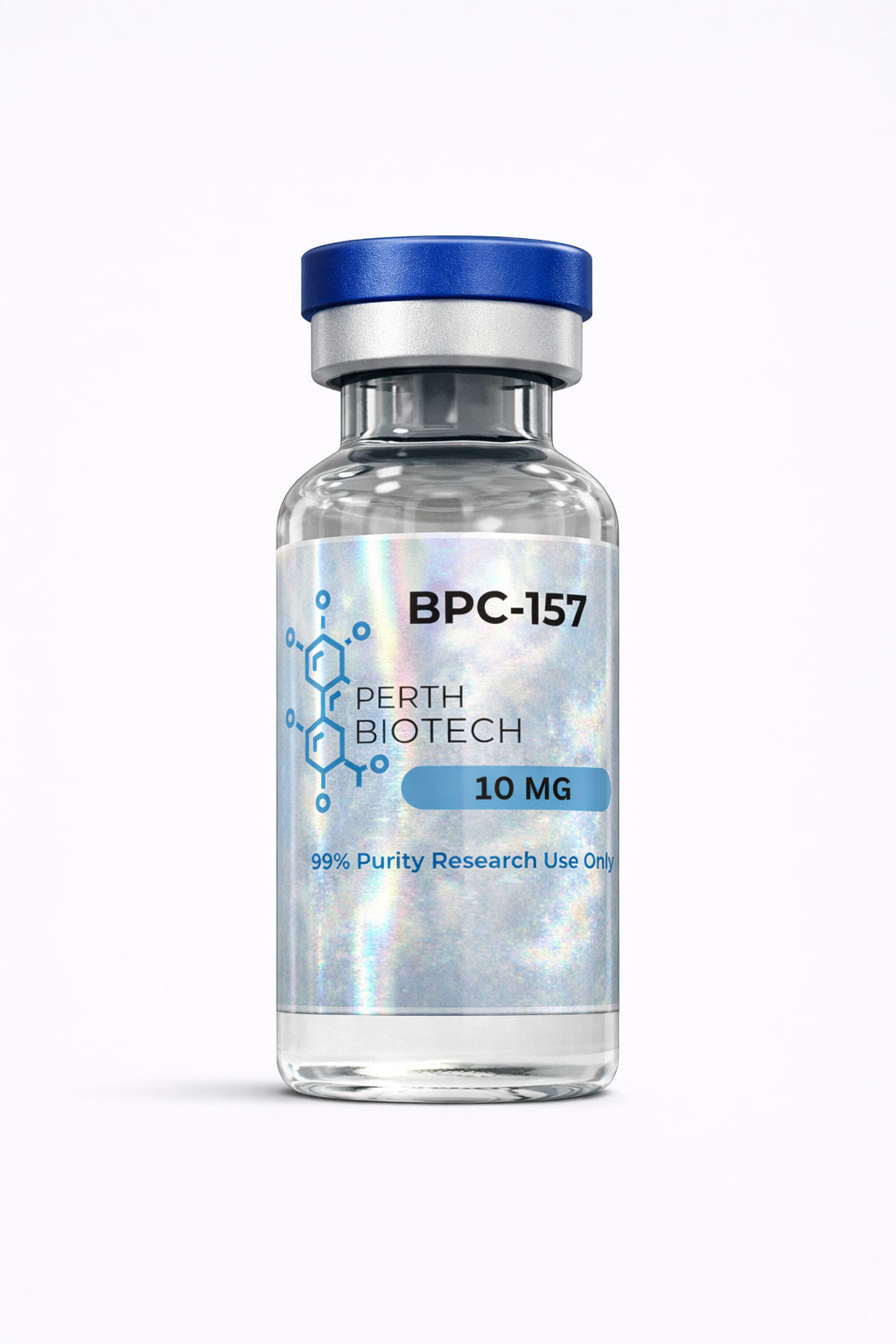
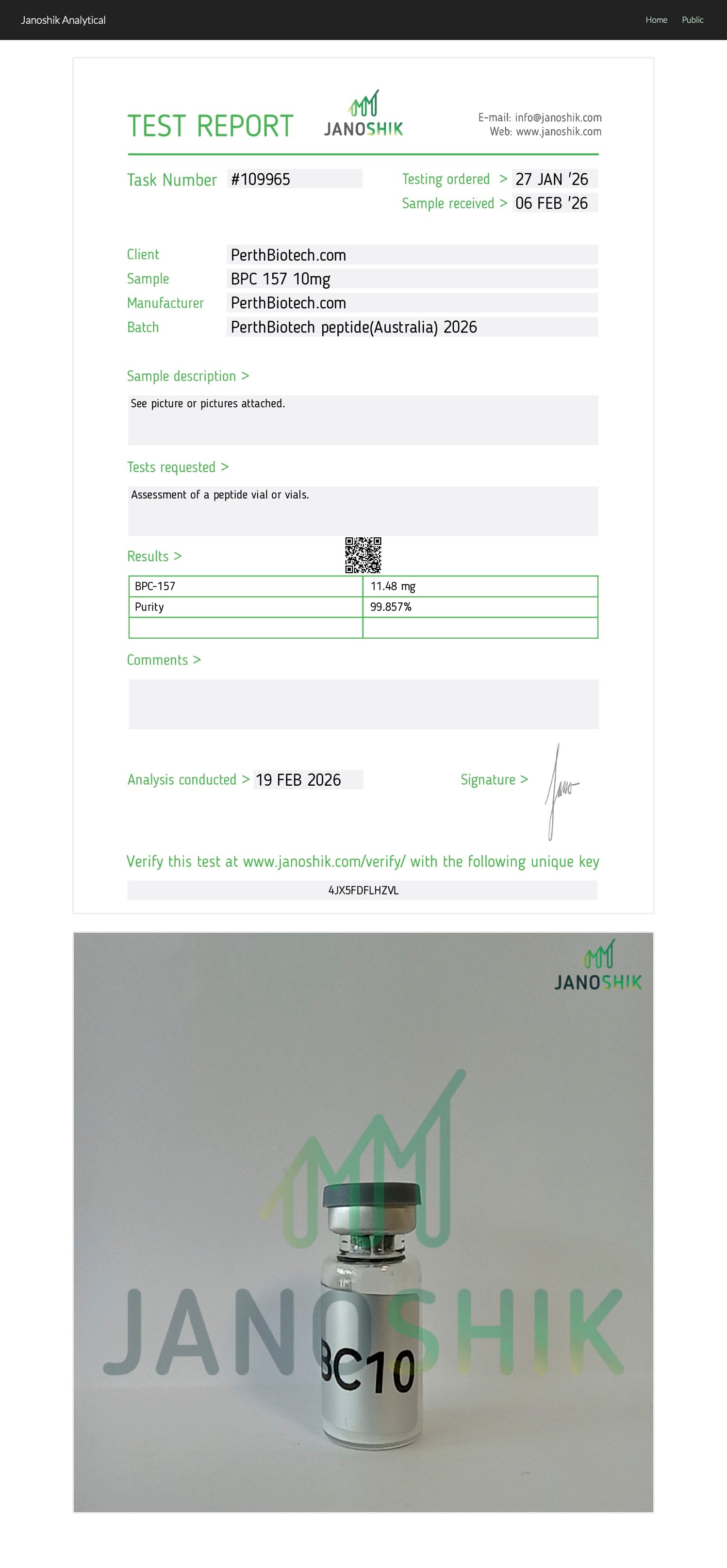
BPC-157 10mg
BPC 157 TB 500 is supplied strictly as a laboratory research material for analytical and scientific use only. Available to qualified researchers, laboratories, and institutions in Perth and across Western Australia, with Australian-based fulfilment.
Intended for in‑vitro research, assay development, method validation, and controlled scientific investigation by appropriately qualified professionals.
Product details
-
Product: BPC-157
-
Strength / size: 10 Mg
-
Molecular Formula:C62H98N16O22
-
Category: Research peptide blend
-
Form: Lyophilised powder
-
Use: Laboratory research only
-
Supply: Perth & Western Australia (AU shipping)
SEQUENCE: L-Valine,glycyl-L-alpha-glutamyl-L-prolyl-L-prolyl-Lprolylglycyl-L-lysyl-L-prolyl-L-alanyl-L-alpha-aspartyl-L-alpha-aspartyl-L-alanylglycyl-L-leucyl-;glycyl-L-alpha-glutamyl-L-prolyl-L-prolyl-L-prolylglycyllysyl-L-prolyl-L-alanyl-L- alpha-aspartylL-alpha-aspartyl-L-alanylglycyl-L-leucyl-L-valine
BCP-157
BPC-157, Body Protection Compound-157, is obtained from the parent protein Body Protection Compound (BPC). BPC is a naturally occurring protein in the digestive tract. BPC -57 is a penta-decapeptide made up of 15 amino acids, and is derived from a stretch of endogenous BPC identified and isolated from gastric juice. Animal studies have suggested its potential in supporting tissue repair processes in muscle, tendon, and torn ligaments. It may further protect organs and potentially prevent gastric ulcer development. BPC-157 also has the potential to enhance the function of the digestive tract and prevent against irritable bowel syndrome (IBS), gastrointestinal cramps, and Crohn’s disease. The peptide also has possible analgesic characteristics.