
Antimicrobial peptides (AMPs) are short chains of amino acids that form part of the innate immune defence system across humans, animals, plants, and microorganisms. Unlike conventional antibiotics, AMPs act rapidly and through multiple mechanisms, making them a promising area of research in the global response to antimicrobial resistance.
AMPs exhibit activity against a broad range of pathogens, including bacteria, fungi, viruses, and parasites, while also playing roles in immune modulation and inflammation control.
🔬 What Are Antimicrobial Peptides?
AMPs are typically:
- Short peptides (5–50 amino acids)
- Positively charged, allowing interaction with microbial membranes
- Amphipathic, meaning they contain both hydrophobic and hydrophilic regions
These properties allow AMPs to selectively target microbial cells while largely sparing host cells.
🧫 How Antimicrobial Peptides Work
1️⃣ Membrane Disruption (Primary Mechanism)
Most AMPs act by directly targeting microbial cell membranes. Bacterial membranes carry a net negative charge, which attracts positively charged AMPs. Once attached, peptides disrupt membrane integrity, leading to rapid cell death.
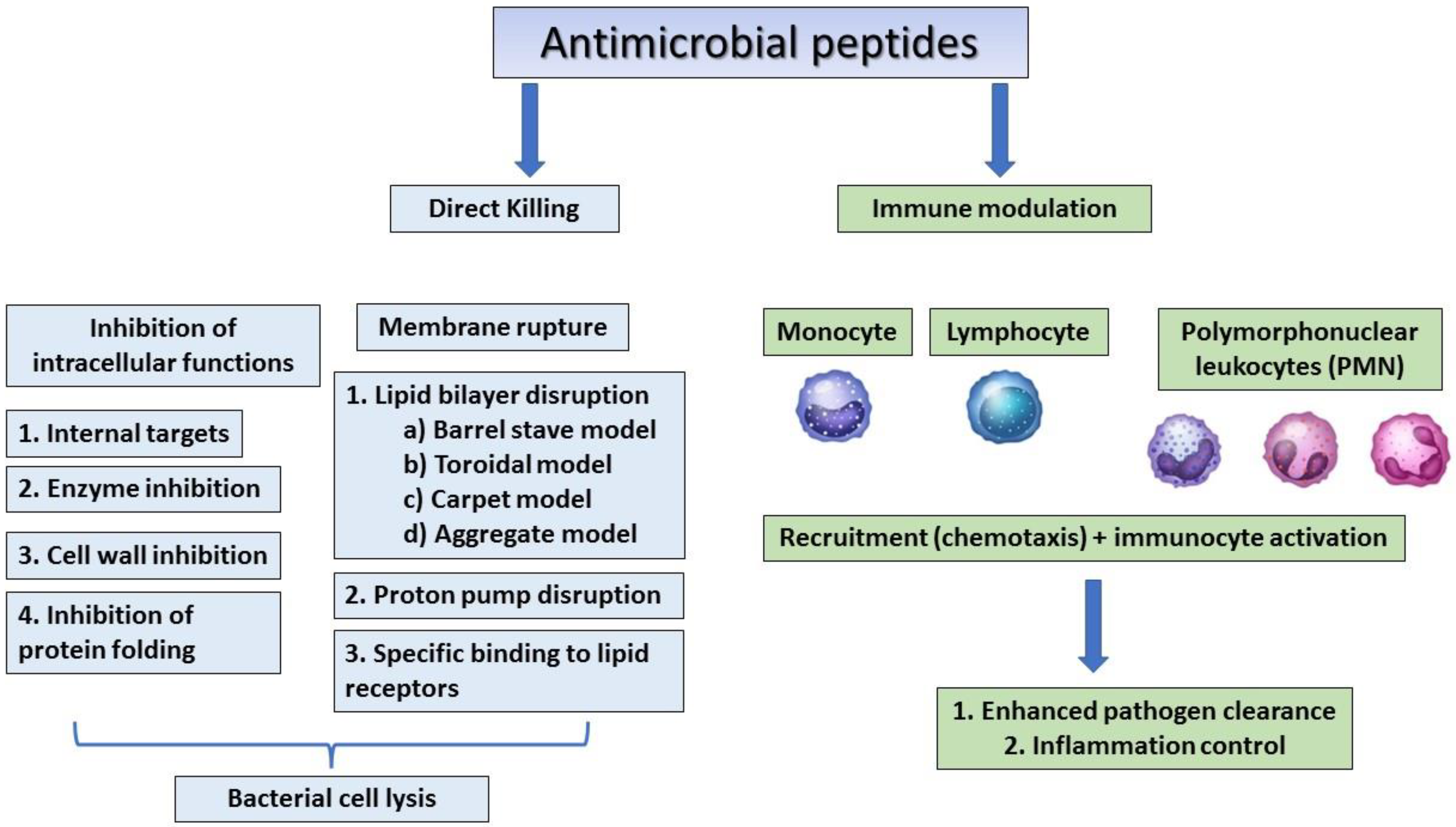
Common disruption models include:
- Barrel-stave model – peptides form pores through the membrane
- Toroidal pore model – membrane bends inward around the peptide
- Carpet model – peptides coat the membrane until it collapses
Result: leakage of cellular contents and microbial death.
2️⃣ Intracellular Targeting
Some AMPs penetrate the microbial cell without fully destroying the membrane. Once inside, they may:
- Interfere with DNA or RNA synthesis
- Disrupt protein production
- Inhibit enzyme activity
This dual-mode behaviour makes AMPs harder for microbes to adapt against.

3️⃣ Immune Modulation
Beyond direct antimicrobial effects, some AMPs act as immune signalling molecules. They can:
- Recruit immune cells to infection sites
- Regulate inflammatory responses
- Enhance wound healing processes
This makes AMPs particularly interesting for research into immune-mediated diseases and tissue repair.
🧠 Why AMPs Matter in Modern Research
Antibiotic resistance is a growing global challenge. AMPs offer several advantages:
- Broad-spectrum activity
- Rapid mechanism of action
- Lower likelihood of resistance development
- Multiple biological roles beyond antimicrobial activity
Because they attack microbes using physical and biochemical mechanisms rather than single enzyme targets, resistance is far more difficult for pathogens to develop.
🧪 Research Applications of Antimicrobial Peptides
AMPs are currently explored in:
- Infection and resistance research
- Wound healing and tissue regeneration models
- Biofilm disruption studies
- Immunology and inflammatory signalling research
Ongoing peptide engineering aims to improve stability, bioavailability, and specificity while minimising degradation.
🔮 Looking Ahead
Advances in peptide synthesis and computational modelling are enabling the design of next-generation antimicrobial peptides with enhanced selectivity and durability. These developments position AMPs as a critical research focus in the future of antimicrobial science.
⚠️ Research Use Disclaimer
All antimicrobial peptides referenced are intended for laboratory research use only. Not for human or veterinary administration.